
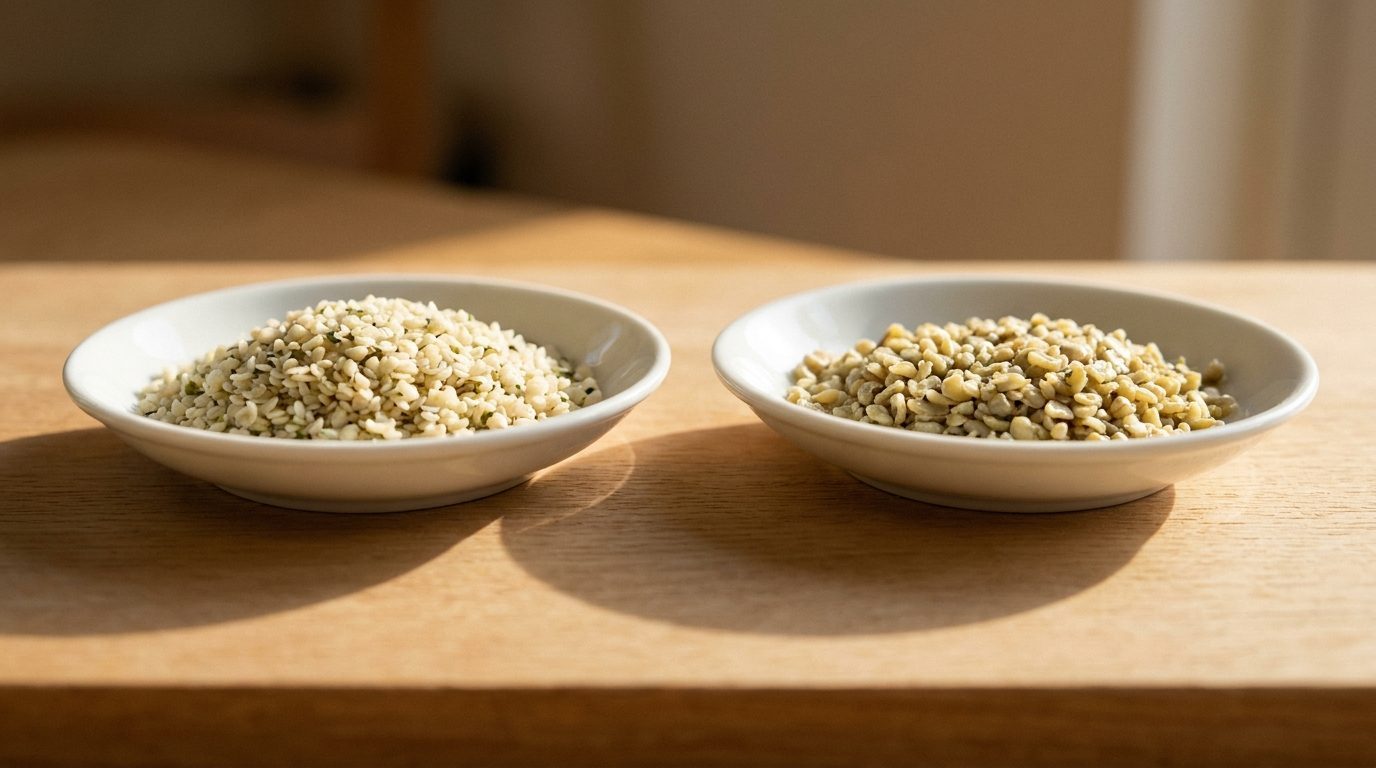
Shelled hemp seed does not spoil dramatically. It fades, and the fading is easy to miss if you have nothing fresh to compare it against.
Why is shelled hemp seed so prone to rancidity in the first place?
The hull is a barrier. Removing it exposes a soft, oil-rich kernel directly to air, light and heat, and hemp seed oil is unusually high in polyunsaturated fatty acids, mainly linoleic and alpha-linolenic acid. Polyunsaturated fats have multiple double bonds in the fatty acid chain, and each of those is a site where oxygen can attack. That is what makes hemp nutritionally interesting and also what makes it fragile.
Oxidation is a chain reaction. Once it starts, it produces compounds that accelerate further oxidation, which is why a batch that seemed fine for months can deteriorate noticeably over a few weeks once it turns. Heat and light both speed the reaction; oxygen availability determines how far it can run.
What does rancid shelled hemp seed smell and taste like?
Smell is the most sensitive test you have, and it works before taste does. Fresh shelled hemp seed has a mild, clean, faintly green and nutty aroma, closer to sunflower kernel or fresh walnut than to anything strong. It should not smell of much at all until you put your nose into the container.
Rancid seed develops a different profile. In order of how commonly people notice them:
- Paint or varnish. A thin, solvent-like sharpness at the top of the smell. This is the classic oxidised-oil note and the most reliable single indicator.
- Old cooking oil or fryer. A heavier, stale-fat smell, often in seed that has been stored warm.
- Fishy. Sometimes reported with omega-3-rich seeds and oils as oxidation progresses.
- Cardboard or dust. A flat, papery staleness, common in the early stages before anything sharper develops.
Taste confirms what the nose suspects. Fresh seed is creamy and mildly sweet with a soft nutty finish. Rancid seed goes bitter, and crucially the bitterness lingers and builds. A slight bitterness that clears immediately is normal. A bitterness that coats the back of the tongue and stays for a minute after swallowing is oxidation.
Warm a small spoonful in your hand before smelling it. Body heat volatilises the aroma compounds and makes a marginal batch much easier to call.
Can you see or feel it?
Visual signs are weaker than sensory ones, but they are worth checking because they often accompany other problems.
Fresh shelled hemp seed is off-white to pale cream with faint green tinges, and individual kernels look soft-edged rather than glassy. Deterioration tends to show as an overall dulling and a shift towards grey or yellowish tones. That said, natural colour varies between varieties and lots, so colour alone proves very little unless you are comparing two samples side by side.
Texture is more telling. Seed that has picked up moisture may clump, feel tacky, or leave an oily residue on the fingers beyond the light film that is normal. Clumping matters because moisture is a separate hazard from oxidation. It opens the door to mould, which is a food safety issue rather than a quality one. Visible fuzz, off-white powdery patches, or a musty, cellar-like smell are reasons to discard the batch outright, not to make a judgement call about flavour.
How do you test a batch properly?
The comparison is what makes this reliable. Sensory memory for freshness is poor without a reference.
- Keep a small reference sample from a batch you know is good, sealed and frozen. Freezing slows oxidation substantially, so it stays usable as a benchmark far longer than the working stock.
- Pour a spoonful of each into separate small bowls or cups and let them come to room temperature.
- Smell the reference first, then the sample under test, then the reference again. Alternating resets your nose.
- Taste each on its own, without other food, and wait thirty seconds after each before judging the aftertaste.
For a bulk buyer this is worth formalising. Pull the sample from the middle of the bag rather than the top, since the surface layer is the most exposed and will overstate the problem. If you are assessing multiple bags from a lot, sample several. Uneven results across bags in the same shipment usually point to a packaging or seal failure rather than to the lot itself.
What causes it to happen faster than it should?
Most premature rancidity traces to storage rather than to the seed. The usual culprits, roughly in order of impact:
- Warm storage, since an ambient stockroom in summer is much harder on hemp seed than a fridge or freezer
- Repeated opening of a large container, which replaces the headspace with fresh oxygen each time
- Clear packaging exposed to light on a shelf
- Decanting into a container far larger than the volume it holds, leaving a large air space
- Temperature cycling, particularly moving stock in and out of cold storage, which can drive condensation into the seed
Buying more than you can turn over compounds every one of these. If you keep finding batches going off, the fix is usually smaller, more frequent purchases rather than a different supplier. There is more on storage handling across our articles.
What to do with a batch you are unsure about
Smell it cold, smell it warmed in your hand, taste a few kernels plain, and wait. If the bitterness lingers, do not try to hide it in a smoothie. Oxidised oil does not improve with dilution and the flavour will find its way through. Note the packing or best-before date and the lot code, photograph the packaging, and contact the supplier while you still have the evidence. A legitimate supplier will want to know, particularly if the date suggests the seed should still have been well within life. Then adjust your next order downward to a quantity you will finish in weeks rather than months, and store the working portion cold with the remainder sealed and frozen. That single change resolves the majority of rancidity complaints.