
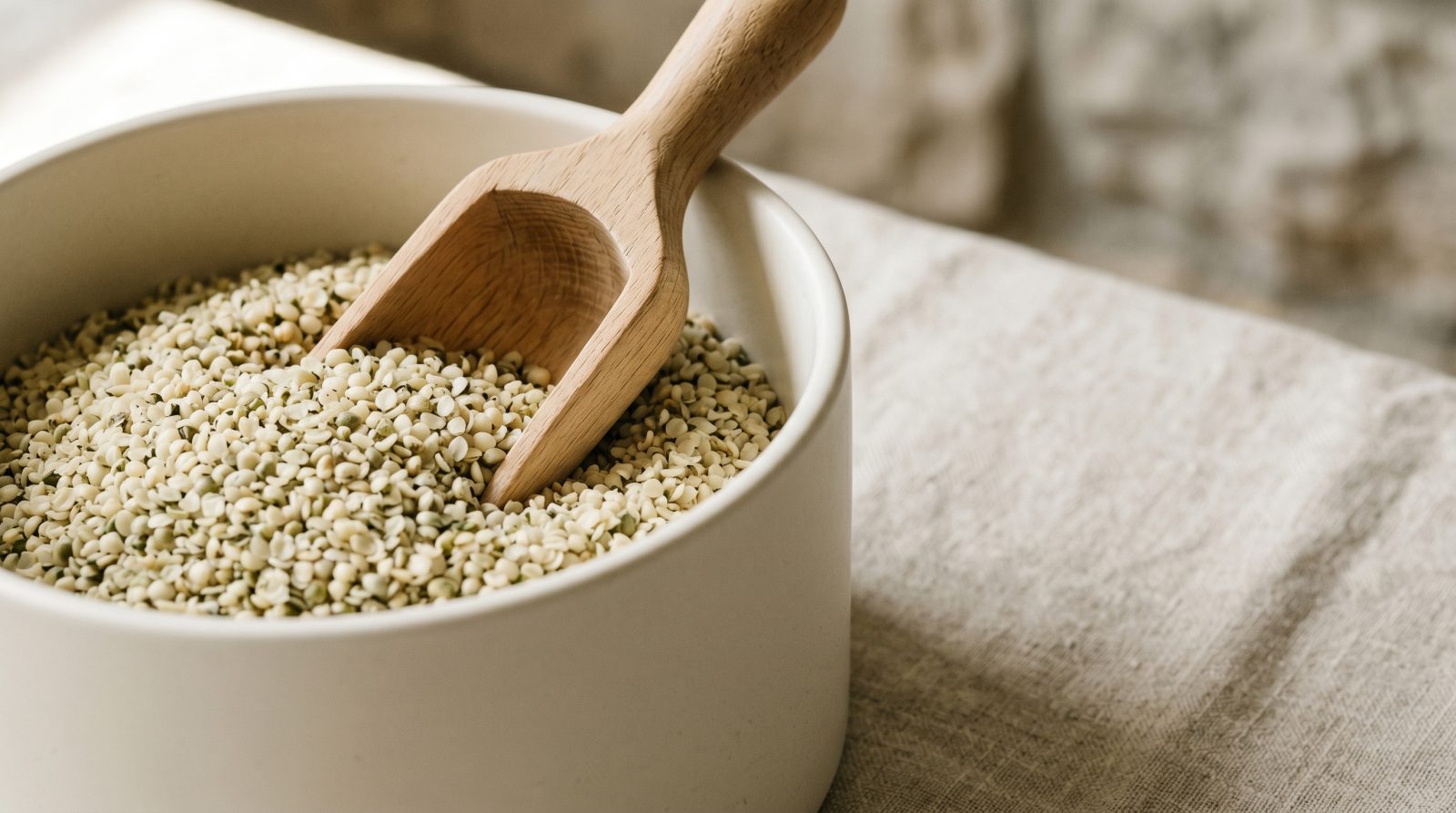
Bulk shelled hemp seed (5 kg and larger) requires planning for storage to maintain quality across the months it will take to consume. The two critical variables are temperature and air exposure.
The bulk storage protocol
On receipt of a bulk shipment:
- Inspect packaging for damage or punctures. Reject any damaged delivery.
- Verify best-before date and lot number against documentation.
- Smell-test a small portion to confirm freshness.
- Decant immediately into working portions. Do not store the bulk bag at room temperature once opened.
- Refrigerate the working portion (200 to 500 grams for households, larger for businesses).
- Freeze the remainder in clearly labelled portions.
Portion sizing for storage
| Setting | Working refrigerated portion | Frozen portion size |
|---|---|---|
| 1-person household | 250 g | 500 g |
| 2-3 person household | 500 g | 500 g - 1 kg |
| 4+ person household | 1 kg | 1 kg |
| Small cafe (regular use) | 1-2 kg | 2 kg |
| Food manufacturer | Per-batch quantity | Climate-controlled storage |
Container choices
For refrigerator storage: glass jars with tight-fitting lids, or BPA-free plastic containers. Glass does not absorb oils or flavours. Squeeze air out before sealing.
For freezer storage: heavy-duty freezer bags with air pressed out, or glass jars with airtight lids (leave some headroom for expansion). Vacuum-sealed bags extend freezer life further.
Inventory rotation
FIFO (first-in, first-out) rotation prevents older stock from being forgotten in the freezer:
- Label every container with date received.
- Pull from refrigerator first when refrigerated stock runs low.
- Pull oldest frozen portion when refilling refrigerated stock.
- Maintain a written or app-based inventory for larger volumes.
Quality monitoring across storage life
For volumes stored longer than 3 months, periodic quality checks prevent surprises:
- Monthly visual inspection of refrigerated stock.
- Quarterly smell check of frozen portions when retrieving for use.
- Immediate use of any portion showing changes (smell, colour, texture).
Bulk supply scaling for businesses
Food businesses incorporating shelled hemp seed into products at scale should consider:
- Climate-controlled storage (cool, dry, dark) for bulk inventory exceeding immediate use.
- Documentation of receiving, storage temperatures, and lot tracking for traceability.
- Direct supplier relationships for consistent specifications across multiple deliveries.
- HACCP-compliant handling procedures including dedicated equipment, scoops, and containers.
- Allergen labelling considerations: hemp is not on Canada's priority allergen list but may share equipment with allergens at the supplier facility.
When bulk does not make sense
Bulk is not always economical. Three situations where smaller retail formats are more practical:
- Low consumption rate. If hemp is an occasional ingredient (less than 100 g per month), retail-format storage is simpler and cost difference is minimal.
- Limited freezer space. Without freezer capacity for surplus, bulk hemp will spoil before consumption.
- Variable consumption. If consumption is inconsistent, smaller-format purchases reduce waste risk.